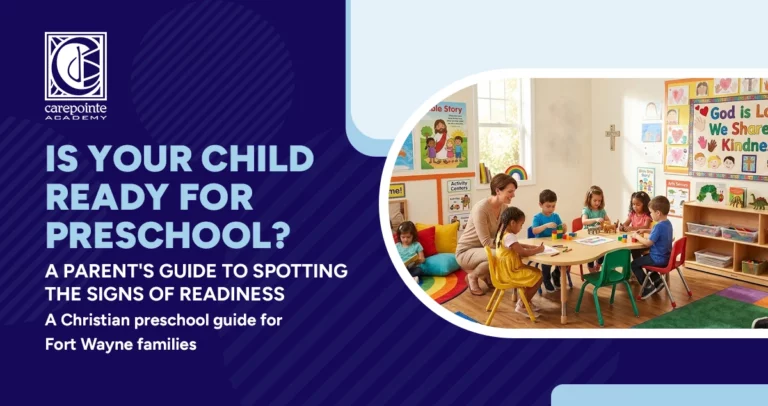


Sending your little one to preschool is one of those meaningful milestones that brings excitement, pride, and a few first-day jitters. If you are looking for a Christian preschool in Fort Wayne, it is natural to wonder how your child will adjust, make friends, and feel secure in a new classroom environment.
At Carepointe Academy, we believe the transition to the classroom should be a bridge, not a hurdle. Our caring Christian teachers help children feel safe as they grow socially, emotionally, academically, and spiritually in a loving Christian environment.
In this guide on how to prepare your toddler for preschool, we will share practical preschool transition tips to build confidence, ease preschool separation anxiety, and help your child feel ready for their first day. We will also explore how a Christian foundation can bring comfort as your family begins this new season.
 Saying goodbye can be one of the hardest parts of the preschool transition for both you and your child. Preschool separation anxiety is a normal developmental stage, and with consistency, reassurance, and caring support, it can become easier over time.
The morning of the first day can feel chaotic if you are not prepared. Having everything packed and ready the night before will save you time and keep the morning atmosphere calm. A calm morning leads to a much better drop-off experience.
Here is a comprehensive checklist to help you get ready:
Preparation at home is the first step, but the environment your child enters makes all the difference. At Carepointe Academy, we have built our entire program around making that “big kid” milestone feel safe, welcoming, and manageable for both of you.
Saying goodbye can be one of the hardest parts of the preschool transition for both you and your child. Preschool separation anxiety is a normal developmental stage, and with consistency, reassurance, and caring support, it can become easier over time.
The morning of the first day can feel chaotic if you are not prepared. Having everything packed and ready the night before will save you time and keep the morning atmosphere calm. A calm morning leads to a much better drop-off experience.
Here is a comprehensive checklist to help you get ready:
Preparation at home is the first step, but the environment your child enters makes all the difference. At Carepointe Academy, we have built our entire program around making that “big kid” milestone feel safe, welcoming, and manageable for both of you.
Preschool Transition Tips For Toddlers

1. Align Your Home Routine
Gradually adjust your home routine to match the upcoming school schedule.- Wake-up time: Start waking your child up ten minutes earlier each day.
- Meals and naps: Shift nap and meal times to align with the preschool’s daily rhythm.
2. Foster Independence
Caring Christian teachers are there to guide and support your child, but toddlers often feel more confident when they can complete small tasks on their own. Practice these skills at home and make them fun!- Washing hands
- Putting on shoes
- Opening snack containers
3. Read About School
Reading books about preschool is a fantastic way to prepare your toddler for preschool. Choose stories featuring characters who go to school, make new friends, and come home to their parents. Talk about the pictures and ask your child how the characters might be feeling. This opens the door for your toddler to share their own feelings about going to school.4. Prepare With Christian Values At Home
Use this preschool transition as an opportunity to reinforce Christian values, love, and trust at home.- Pray together: Pray for your child’s new teachers, friends, and their time at school. This teaches them to trust God in new situations.
- Talk about virtues: Discuss Christian values like kindness, sharing, and loving others as Jesus loves us. Remind them that they can show God’s love to their new friends.
- Bible stories: Read stories about courage and friendship, like David and Jonathan, to help them feel brave and excited about meeting new people.
5. Practice Social Skills
Socialization is an important part of your child’s Fort Wayne preschool experience, especially as they learn kindness, patience, and friendship in a Christian childcare setting. If your child is not used to being around other kids, arrange a few playdates. Visit the local park or invite a friend over for an afternoon of shared play. Teach them simple concepts, such as taking turns and sharing toys. These small interactions build the social skills they will use every day in the classroom. A smooth transition to Christian preschool is about helping your child feel familiar, confident, and supported in a loving classroom environment. By taking these small steps together, you are helping them prepare for their first day while building a positive foundation for lifelong learning.How To Ease Preschool Separation Anxiety
 Saying goodbye can be one of the hardest parts of the preschool transition for both you and your child. Preschool separation anxiety is a normal developmental stage, and with consistency, reassurance, and caring support, it can become easier over time.
Practice Short Separations
Start by practicing short separations. Leave your child with a trusted family member or a babysitter for an hour or two. When you return, make a point to say, “I told you I would come back, and here I am!” This builds trust. Your child learns that when you leave, you always return.An Exclusive Goodbye Routine
Create a special goodbye routine. Keep it brief and positive. A long, drawn-out goodbye often increases anxiety for toddlers. Your routine could be a special handshake, a big hug and a kiss on the forehead, or a specific phrase like, “I love you, have fun, I will see you after lunch.” Once you do the routine, hand your child to the teacher and walk away confidently. Do not sneak out when your child is not looking. Sneaking away breaks trust and can make the next drop off much harder.Introduce a Transitional Object
Consider giving your child a transitional object. This is a small item from home that brings them comfort. It could be a family photo, a small stuffed animal, or even a drawn heart on their hand that matches one on yours. When they miss you, they can look at the object and feel connected to you.Lean on Christian Values
Leaning on Christian values can bring comfort during the preschool transition. You may pray with your child before leaving home or on the way to school, asking God to help them feel brave, loved, and ready for the day. Remind your child that God is always with them, even when Mommy or Daddy is at work. Knowing they are loved by you and loved by God provides a powerful sense of security. If your child cries, stay calm. The experienced Christian teachers at Carepointe Academy are prepared to comfort your child, offer reassurance, and help them engage in a fun activity. Trusting the process (and the teachers) is key. Before you know it, they’ll be so busy having fun, they might not even notice when you come to pick them up.First Day Of Preschool Checklist For Toddlers
 The morning of the first day can feel chaotic if you are not prepared. Having everything packed and ready the night before will save you time and keep the morning atmosphere calm. A calm morning leads to a much better drop-off experience.
Here is a comprehensive checklist to help you get ready:
The morning of the first day can feel chaotic if you are not prepared. Having everything packed and ready the night before will save you time and keep the morning atmosphere calm. A calm morning leads to a much better drop-off experience.
Here is a comprehensive checklist to help you get ready:
Clothing and Accessories
- Comfortable, weather-appropriate clothes. Choose items that are easy for your child to pull up and down when using the bathroom.
- Closed-toe shoes suitable for running and playing outside.
- A complete extra set of clothes (shirt, pants, underwear, and socks) packed in a Ziploc bag. Accidents and messy art projects happen!
- A light jacket or sweater, clearly labeled with your child’s name.
Meals and Snacks
- A reusable water bottle with a spill-proof lid, labeled with their name.
- If you are providing lunch, pack a nutritious, easy-to-open meal. Avoid foods that require heating. Include an ice pack if necessary.
- Healthy snacks if the school does not provide them. Cut grapes, cheese sticks, and crackers are great options.
Rest Time Essentials
- A small, comforting blanket.
- A favorite small stuffed animal for nap time (if the school allows it).
Paperwork and Health
- All required enrollment forms, emergency contacts, and signed policies.
- Up-to-date immunization records.
- Any necessary medications along with a signed medication authorization form.
- A list of any allergies or dietary restrictions should be clearly written out for the teacher.
- A family photo to keep in their cubby.
- A cheerful, reassuring note tucked into their lunchbox. Even if they cannot read it yet, the teacher can read it to them.
Building a Strong Parent and Teacher Relationship
Your child’s teacher is your partner in their early education. A strong, positive relationship between you and the teaching staff can make a world of difference for your child. When they see you interacting warmly and confidently with their teacher, it sends a powerful message: this loving Christian environment is safe, supportive, and filled with adults they can trust. Make the most of orientation or the first day of drop-off to introduce yourself. Go beyond just saying hello. Share a few key insights about your child. What are their favorite songs or books? What comforts them when they’re upset? Are there any specific fears or allergies the teacher should know about? You could even jot these down in a quick “About Me” note for the teacher to read later. This open line of communication sets a collaborative tone for the year. If concerns about your child’s adjustment pop up, don’t hesitate to schedule a brief chat. Remember, you and the teacher share the same goal: to help your child thrive.How Carepointe Academy Supports Your Child’s Preschool Transition
 Preparation at home is the first step, but the environment your child enters makes all the difference. At Carepointe Academy, we have built our entire program around making that “big kid” milestone feel safe, welcoming, and manageable for both of you.